Macau for Travellers: What to See Between the Historic Centre and Modern Casinos
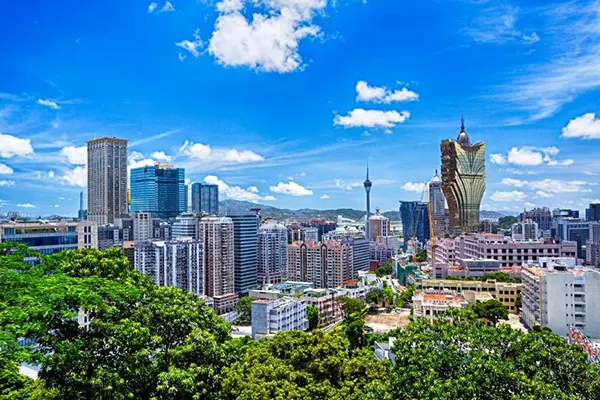
Macau is one of the few destinations where centuries-old streets stand within minutes of large-scale entertainment districts. Formerly a Portuguese territory and now a Special Administrative Region of China, the city combines European architectural heritage with East Asian culture and a rapidly evolving skyline. For travellers, the real value lies not in choosing between history and modernity, but in understanding how both layers coexist in a compact urban space.
Historic Centre of Macau: Streets, Squares and Cultural Layers
The Historic Centre of Macau, listed as a UNESCO World Heritage Site, forms the cultural backbone of the city. Senado Square, with its distinctive wave-patterned pavement, serves as a central point connecting key landmarks such as St Dominic’s Church and the Leal Senado building. The area reflects Portuguese urban planning principles adapted to a subtropical environment.
One of the most recognisable landmarks is the Ruins of St Paul’s, the façade of a 17th-century church destroyed by fire. While only the front structure remains, it represents the fusion of European religious architecture with Asian decorative elements. Nearby, the Monte Fort provides a strategic viewpoint over the old town and demonstrates Macau’s historical role as a trading and defensive port.
Walking through the narrow streets reveals a mix of temples and colonial houses. A-Ma Temple, dedicated to the sea goddess Mazu, predates the Portuguese arrival and is closely linked to the origin of the city’s name. This coexistence of Chinese and European heritage is one of the defining characteristics of Macau’s identity.
Local Neighbourhoods and Everyday Culture
Beyond the main tourist routes, districts such as São Lourenço and Taipa Village offer a more grounded perspective. Here, residential buildings, small eateries and traditional shops show how daily life continues alongside tourism. Taipa Village, in particular, preserves a slower pace compared to the central peninsula.
Macanese cuisine, influenced by Portuguese, Chinese and Southeast Asian traditions, can be experienced in these neighbourhoods. Dishes like African chicken and minchi reflect centuries of cultural exchange. Visiting smaller restaurants often provides a more authentic understanding of local food culture than large commercial venues.
Markets and street vendors also play an important role. Fresh produce markets, incense shops and bakeries selling almond cookies and egg tarts create a sensory layer that complements the architectural experience. These details help travellers connect with the city beyond its major landmarks.
The Modern Casino District: Cotai Strip and Urban Development
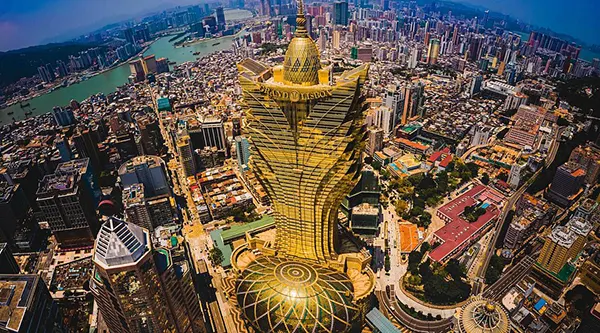
The Cotai Strip, built on reclaimed land between Taipa and Coloane, represents Macau’s modern transformation. Large integrated resorts dominate the skyline, combining accommodation, entertainment, shopping and gaming under one roof. Developments such as The Venetian Macao and City of Dreams have reshaped the city’s global image.
While casinos are a major economic driver, these complexes also include theatres, exhibition spaces and international dining options. Visitors who are not interested in gaming can still explore architectural replicas, indoor canals and large-scale retail areas. The focus is on creating self-contained environments that operate independently of the surrounding city.
Transport infrastructure has adapted to support this expansion. The Macau Light Rapid Transit system connects key areas, while frequent shuttle buses link hotels, ferry terminals and the airport. This makes it relatively easy to move between the historic centre and the Cotai area within a short time.
Architecture, Design and Visitor Experience
The design of modern resorts often draws inspiration from global landmarks, from Venetian canals to Parisian boulevards. While this approach can feel artificial, it reflects Macau’s role as an international entertainment hub targeting diverse audiences. The scale of these projects contrasts sharply with the compact streets of the old town.
Inside these complexes, attention is given to climate control, navigation and visitor flow. Clear signage, indoor walkways and integrated services allow visitors to spend extended periods without leaving the building. This controlled environment is particularly appealing during hot or humid weather conditions.
At night, the Cotai Strip becomes a visual spectacle, with illuminated façades and large digital displays. The contrast between day and night experiences adds another dimension to exploring Macau, especially for those interested in urban design and lighting.
Balancing History and Modernity in One Trip
One of Macau’s main advantages is its compact size, which allows travellers to explore both historical and modern areas within a single day. Planning a route that starts in the Historic Centre and ends in Cotai provides a logical progression from past to present. Walking and short taxi rides are usually sufficient.
Timing also plays a role. Visiting historical sites early in the morning helps avoid crowds, while the casino district is more active in the evening. This natural rhythm allows travellers to experience different aspects of the city without feeling rushed.
It is also worth considering cultural etiquette and local regulations. While Macau is open to international visitors, certain areas—especially religious sites—require respectful behaviour. Understanding these nuances improves the overall experience and helps avoid common mistakes.
Practical Tips for Travellers in 2026
As of 2026, Macau continues to develop its tourism infrastructure while maintaining strict regulatory frameworks, particularly in the gaming sector. Identification is required for entry into casino areas, and age restrictions are enforced. Travellers should carry valid documents at all times.
Digital payments are widely accepted, but cash remains useful in smaller establishments. The local currency, the Macanese pataca, is often used alongside Hong Kong dollars. Exchange rates are generally stable, though minor differences can occur in everyday transactions.
Finally, combining Macau with nearby destinations such as Hong Kong or Zhuhai can add depth to a trip. High-speed ferries and bridge connections make regional travel efficient. This broader perspective highlights Macau’s position as both a historical port city and a modern gateway in the Pearl River Delta.
Popular articles
-
Limassol and City of Dreams Medi...
Limassol is one of the easiest …
-
Discover Copenhagen: A Vibrant C...
Copenhagen, Denmark’s vibrant capital, effortlessly blends …
-
Sagrada Família in 2026: What Ch...
The Sagrada Família entered a new …