
Great Wall of China: Which Section to Choose for Your First Visit
The Great Wall of China stretches for more than 21,000 kilometres across northern China, yet only a limited number of sections are realistically accessible to international visitors. For a first-time trip in 2026, the choice of location will shape your entire experience — from crowd levels and transport logistics to scenery, safety and historical authenticity. Having travelled extensively in China and worked with licensed Beijing-based guides, I can confidently say that not all sections of the Wall offer the same atmosphere. Some are carefully restored and convenient, others are rugged and physically demanding. Understanding these differences is essential before you book your tickets.
Mutianyu: The Most Balanced Choice for First-Time Visitors
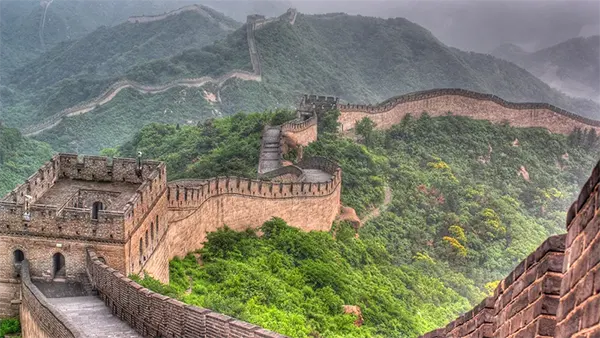
Located approximately 73 kilometres northeast of central Beijing, Mutianyu is widely regarded as the best all-round option for a first visit. Fully restored and structurally secure, this section combines historical architecture with accessible facilities. It features 23 watchtowers along a relatively scenic stretch surrounded by forested hills, which look particularly impressive in spring and autumn. In 2026, Mutianyu remains well managed, with timed entry systems during peak seasons to regulate visitor flow.
One of the key advantages of Mutianyu is its manageable terrain. The walk between towers is less steep compared with Badaling, making it suitable for families, older travellers and those without hiking experience. There is also a cable car and a chairlift to reach the Wall, as well as a toboggan slide for descent — an unusual but popular feature that is carefully supervised for safety.
Transport is straightforward. From Beijing, visitors can reach Mutianyu by organised tour, private transfer, or public bus combined with a local shuttle. Travel time typically ranges between 1.5 and 2 hours depending on traffic. Entry fees in 2026 average around 40–45 RMB, with additional charges for cable car access.
Who Should Choose Mutianyu and Why
Mutianyu is ideal for travellers seeking a visually impressive yet comfortable introduction to the Great Wall. The restoration work is extensive but respectful, meaning the structure feels authentic without appearing overly modern. Clear signage in English and safety railings along steeper stairs add reassurance for first-time visitors.
Photographers will appreciate the panoramic views and the relatively open layout of the towers. Compared with Badaling, crowd density is generally lower, especially if you arrive before 9:00 am or after 3:00 pm. Early morning visits in autumn often provide the clearest skies.
If your schedule in Beijing is limited to one day for the Wall, Mutianyu offers the best balance between accessibility, scenery and historical atmosphere. For most first-time visitors in 2026, this section represents the safest and most practical decision.
Badaling: The Most Famous but the Most Crowded
Badaling is the most visited section of the Great Wall and historically the first part opened to tourism in 1957. It lies around 70 kilometres northwest of Beijing and is directly connected by high-speed rail, making it the easiest section to access independently. Trains from Beijing North Railway Station take roughly 30–40 minutes in 2026.
This section has undergone significant restoration and reinforcement. Pathways are wide, guardrails are strong, and visitor services are extensive, including museums, food outlets and organised tour infrastructure. Because of this, Badaling is often used for official state visits and international events.
However, popularity comes at a cost. During national holidays and summer weekends, visitor numbers can exceed 60,000 per day. Even with ticket caps introduced in recent years, congestion remains noticeable. For travellers seeking tranquillity, this can diminish the experience.
When Badaling Makes Sense
Badaling is suitable if your time is extremely limited and you rely entirely on public transport. The high-speed train connection is efficient, clearly signposted and affordable, making it convenient for independent travellers unfamiliar with Beijing’s transport system.
It is also the best option for those with mobility concerns. The gradient is moderate, surfaces are stable and security monitoring is strong. For visitors prioritising safety and convenience over solitude, Badaling remains a dependable choice.
If you decide on Badaling, plan carefully. Arriving on a weekday morning outside peak Chinese travel seasons (avoid early October and Lunar New Year) significantly improves the experience. In such conditions, the iconic scenery can still be appreciated without overwhelming crowds.
Jinshanling and Simatai: For a More Authentic Experience
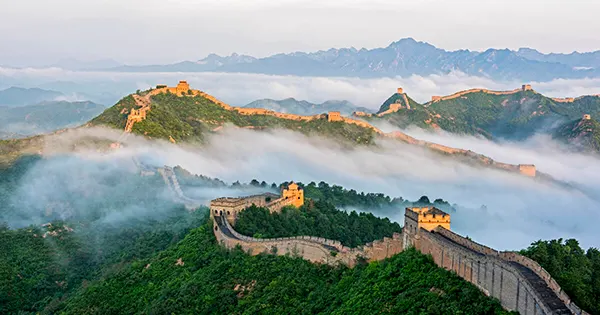
For travellers who prefer fewer crowds and a more rugged atmosphere, Jinshanling and Simatai offer a different perspective. Located approximately 130–150 kilometres northeast of Beijing, these sections require a longer journey — around 2 to 2.5 hours by car — but reward visitors with dramatic mountain landscapes and partially unrestored architecture.
Jinshanling is known for its original Ming Dynasty brickwork and varied watchtower designs. Restoration here has been selective, preserving much of the historical character. The terrain is steeper and more physically demanding than Mutianyu, making it better suited to active travellers.
Simatai is unique because it offers authorised night visits. Illuminated towers create a striking visual effect after sunset. As of 2026, Simatai operates controlled entry numbers to maintain safety and conservation standards, and it is the only section officially open after dark.
Is a Wild or Semi-Restored Section Right for You?
Choosing Jinshanling or Simatai depends on your expectations and fitness level. These areas are quieter and feel closer to the Wall’s historical condition, but they require more preparation. Proper footwear, water and awareness of weather conditions are essential, especially in summer heat or winter ice.
These sections are particularly attractive to landscape photographers and experienced travellers who have already seen major tourist landmarks in China. The visual contrast between restored and weathered stonework provides insight into the Wall’s long construction history during the Ming Dynasty (1368–1644).
For a first visit, these locations can be memorable if you prefer depth over convenience. However, they demand more logistical planning and physical effort. If you are uncertain about stamina or travel time, Mutianyu remains the safer introduction, while Jinshanling or Simatai can be reserved for a second visit to China.
Popular articles
-
New Lucas Museum in Los Angeles:...
The Lucas Museum of Narrative Art …
-
Limassol and City of Dreams Medi...
Limassol is one of the easiest …
-
Discover Copenhagen: A Vibrant C...
Copenhagen, Denmark’s vibrant capital, effortlessly blends …